
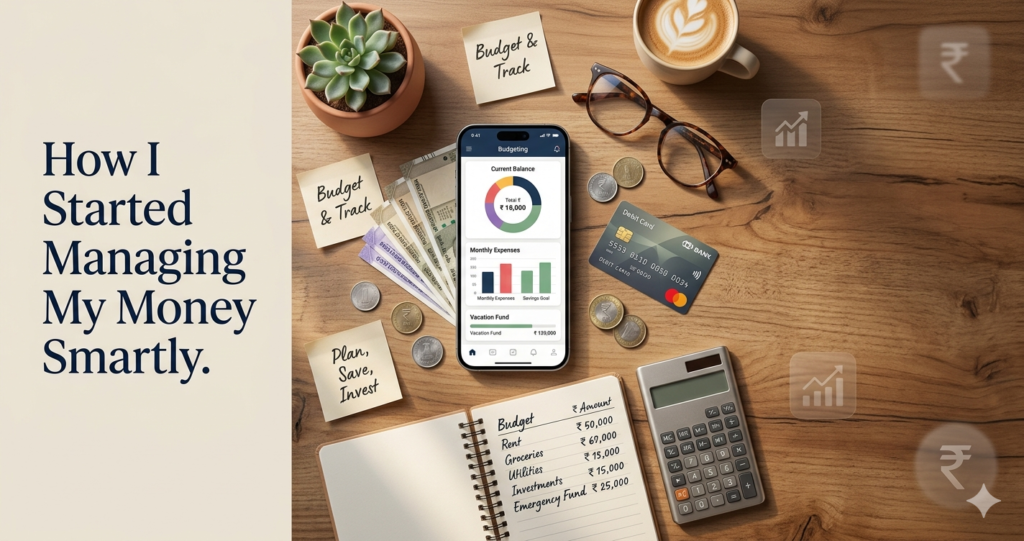
Financial freedom is on everyone’s bucket list, but achieving it requires careful management, attention and discipline. In today’s fast-paced world, where everything is available to you at a finger click, it has become easier than ever to spend money without thinking twice.
Managing money isn’t about how much you earn, but how well you handle what you have.
While living in a gradually growing digital world where we are facing constant exposure to advertisements and smart marketing strategies, people get excited to make unnecessary purchases, which results in losing their monthly salaries to unwanted things without even realising it.
Here in this article, we will learn to differentiate between wants and needs, how to keep track of your money and manage your income in a simple and effective manner.
My wake-up call
The moment that became a wake-up call for me was on a normal day when I checked my balance before making a payment. I thought everything would be fine, like always, but it wasn’t. What hit me hard was how low my balance actually was.
For a few seconds, I just stared at the screen. So many thoughts started running through my mind- bills were still unpaid, my loan EMI was due, and suddenly everything felt stressful. That’s when it really hit me that I couldn’t ignore this anymore.
I started thinking about all the small things I had been spending money on-online shopping, food deliveries-things that didn’t seem like a big deal at that time. But together, they had made a huge impact on my bank balance.
That’s when I realised something important: earning money is not enough; knowing how to manage it is what truly matters.
Facing my reality: understanding my habits.
After that wake-up call, I did something I had never really done before—I started tracking my expenses. At first, it felt unnecessary. Like, what’s the point of writing down ₹100 or ₹200? But when I actually looked at it after a few days, it shocked me.
These small amounts didn’t feel like much at the moment, but together they were a lot more than I expected. That’s when things started to make sense.
I realised I had this habit of buying things just because I felt like it at that moment. No thinking, no planning—just impulse. And honestly, accepting that about myself wasn’t easy, but it was true. And that’s when it hit me properly:it wasn’t about how much I was earning, but the real problem was how I was handling it.
Managing my finances step-by-step
Managing my finances felt overwhelming at first. So, I decided to take it slow with a small start instead of doing everything at once, which seemed to be impossible.
The first thing I did was to create a simple checklist of things I could do to manage my expenses. Writing them down made me feel more confident.
I started following a simple rule for my income that is-50:30:20 ratio. I divided my money into three parts:-
- First part- 50% will be for needs. These are the things you must pay for, like rent, groceries, bills, and essentials. Basically, anything you can’t skip.
- 2nd part-30% will be for wants.These are the things that make life enjoyable but aren’t necessary, like movies, dining out, shopping, or subscriptions. It’s okay to enjoy your money, but in a balanced manner.
- 3rd part-20% will be for savings.
This part will be considered as your emergency fund, your savings, or used for paying off debt. Even if it seems to be a small amount at the start, consistent savings will help in building security and freedom over time.
When I started this method, it was a game-changer. I finally had a structure of my income, and my spending didn’t feel random anymore.
Cutting down unnecessary expenses
Before cutting down the expenses, we need to understand the reality of wants and needs.
- Want- are the things at first-look enjoyable but can be seen as unnecessary–like eating out, shopping for clothes you don’t really need, subscriptions without which nothing seems changed. They look nice to have, but life can go without them.
- Needs are things without survival that can get difficult–like rent, groceries, bills, transportation, and essential services.
When I understood the difference between these two, I used a simple trick that helped me was-asking myself before every purchase, “Do I really need this, or do I just want it?”
When you master the difference between wants and needs, the foundation of smart money management starts without any stress.
How I took control of my loan
Debts used to stress me out a lot. I had a loan hanging over my head, and sometimes I just didn’t want to think about it like an ostrich that hides its head in the ground and thinks no one is looking at it. But avoiding it didn’t help- if anything, it made me feel worse.
Process that I took to end it:
- Break it down- instead of looking at big numbers, I divided it into smaller, manageable amounts.
- Prioritise payments- started paying my EMI on time to avoid penalties and extra interest. If you have multiple loans , pay the high-interest EMI first to reduce the overall burden faster.
- Stop adding new debt- a small EMI, which is seen as nominal at first, can disturb your speed of ending your loan. So avoid unnecessary loans or credit card spending before ending your old liabilities.
- Automate payments- set up an auto-debit for EMI payments if possible. This ensures you never miss a payment and reduces stress about deadlines.
- Track your progress- keep a simple record of payments and remaining balance. Watching your debt go down month by month is motivating and keeps you accountable.
- Stay confident and patient- debt repayments take time. Stick to your plan, celebrate small wins, and don’t get discouraged.
Results:-over time, consistent effort and discipline will reduce your loan, give you confidence and improve your financial control.
What changed after I managed my money
Taking control of my finances didn’t happen overnight, but once I started tracking my expenses, cutting unnecessary wants my finances became better.
The first thing I noticed was less stress and no longer worrying about running out of money for needs. I could actually breathe and enjoy the beauty of financial freedom, which was my long-dreamt-of dream.
Along with less stress came more confidence. Finally, the biggest change that I felt was a feeling of security about my future. I knew that emergencies wouldn’t shake me, and I was prepared to handle unexpected expenses without panic.
Managing my money taught me discipline, responsibility and gave me the freedom to focus on life without financial stress.
Conclusion – start today, own tomorrow
Managing money isn’t something that can be achieved in a single day- it’s a journey. From my wake-up call to tracking down every expense, understanding the maths of the 50:30:20 rule,cutting my unnecessary spendings learning all this takes a toll on me. But while applying this, I learnt that small and consistent steps make¯ the biggest difference.
If you’re just starting, don’t feel like you have to do everything perfectly. Start small, take one step at a time and build momentum.
Always remember, your financial freedom isn’t just about earning more- it’s about managing what you already have. Every rupee you control today is a step towards a safer and more confident future.