
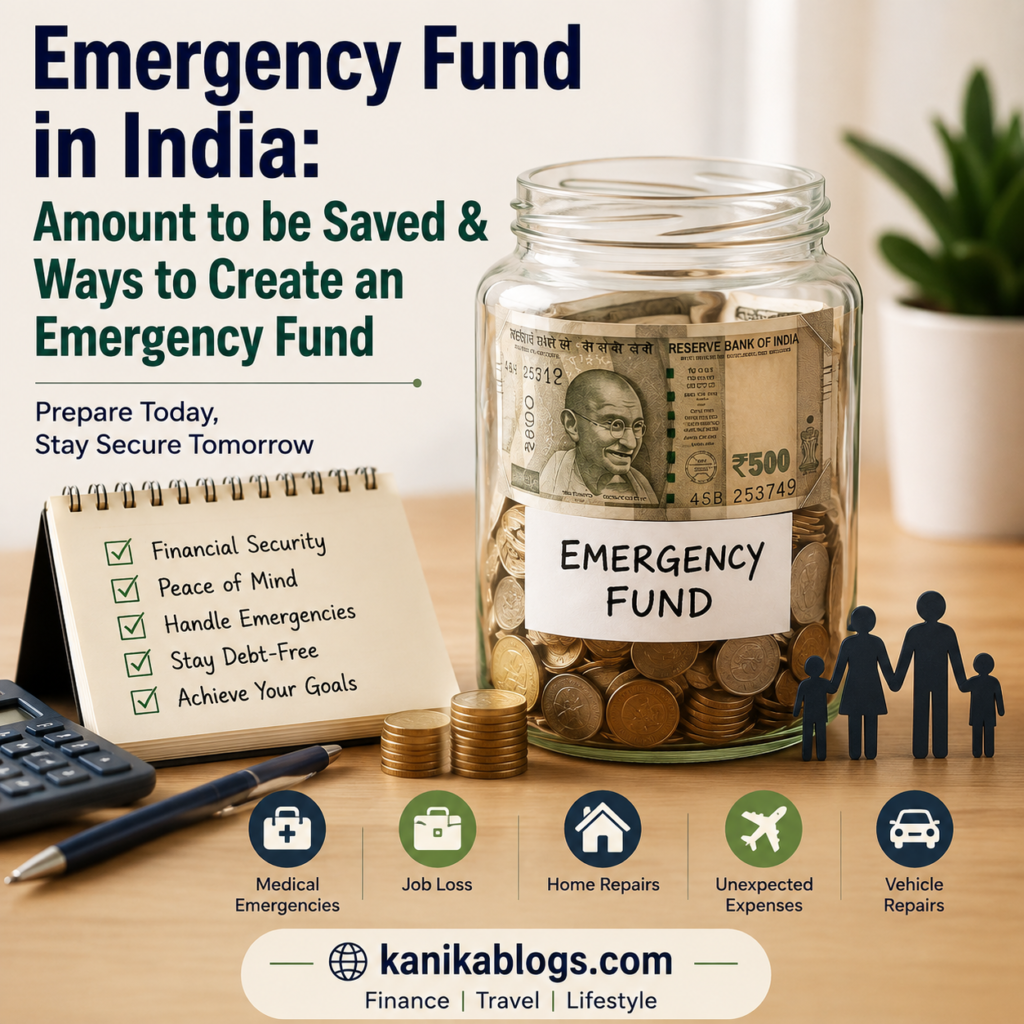
Imagine your laptop suddenly stops working a week before an important exam. Or your company announces layoffs. Maybe you have an unexpected medical bill, urgent home repair, or need to travel home at short notice.
These expenses don’t come with a warning, and that’s exactly why an emergency fund in India is important.
An emergency fund is money kept aside specifically for unexpected expenses. Instead of depending on a credit card, loan, or borrowing from family and friends, you can use your own savings when life throws you a financial surprise.
Whether you’re a student earning through part-time work or a working professional with a monthly salary, building an emergency fund can give you both financial security and peace of mind.
What Is an Emergency Fund?
An emergency fund is a separate pool of money that you use only for genuine financial emergencies. For example:
- Unexpected medical expenses.
- Sudden job loss.
- Urgent home or vehicle repairs.
- Emergency travel.
- Essential electronic replacement, such as a laptop or phone.
- Temporary loss of income.
- Unexpected family-related expenses.
The purpose isn’t to grow your wealth. The primary goal is to make sure you have quick access to money when you need it most. Think of an emergency fund as a financial safety net between you and debt.
Why Is an Emergency Fund Important in India?
An emergency can happen regardless of how carefully you plan your monthly budget.
For working professionals, losing a job can mean several months without a regular salary. For students, an unexpected medical or educational expense can put pressure on already limited finances.
Without savings, you may have to rely on:
- Credit cards
- Personal loans
- Buy-now-pay-later services
- Borrowing from friends or family
- Selling investments at the wrong time
Having an emergency fund reduces the need for these options.
It also protects your long-term financial goals. For example, if you are investing every month for a house or retirement and suddenly face a large expense, you won’t necessarily have to stop your investments or sell your long-term assets.
How Much Emergency Fund Should You Have?
There isn’t one emergency fund amount that works for everyone. A common starting point is to keep 3–6 months of essential expenses in your emergency fund.
For example, suppose your essential monthly expenses are:
- Expense – Monthly amount
- Rent ₹12,000
- Groceries ₹ 5,000
- Utilities ₹ 2,000
- Transport ₹ 3,000
- Insurance/medical ₹ 2,000
- Other essentials ₹ 3,000
- Total ₹ 27,000
So for example if you want six months of emergency savings, it will lead to 27000*6 = 1,62,000. So, your target emergency fund would be around ₹1.62 lakh .
3 months vs 6 months of expenses
A three-month emergency fund can be a good starting point if you have a stable job, predictable income, and limited financial responsibilities. However, you may need to build a larger emergency fund of six months or more if your financial situation is less predictable.
This is especially important if you are self-employed, work as a freelancer, have dependents, manage significant EMIs, or are the primary earning member of your family.
People working in industries with higher job uncertainty may also benefit from keeping a larger financial cushion.
The right emergency fund depends on your individual circumstances. Instead of calculating it based on your total lifestyle spending, focus on essential monthly expenses such as rent, groceries, utilities, insurance, transportation, and loan payments.
Emergency Fund for Students
Students usually don’t have the same financial responsibilities as working professionals, so their emergency fund can be smaller.
Instead of thinking in terms of three to six months of salary, calculate the money you would realistically need during an unexpected situation.
For example, if your essential monthly expenses are ₹8,000, you could initially aim for:
₹8,000 × 3 = ₹24,000 , If ₹24,000 feels impossible right now, start smaller.
Your first goal could simply be ₹5,000, followed by ₹10,000 and then ₹25,000. The important thing is to develop the habit of saving.
Emergency Fund for Working Professionals
If you have a regular salary, building an emergency fund should be one of your first financial priorities, especially before aggressively investing for long-term goals. A practical approach is to calculate:
Essential monthly expenses × number of months = Emergency fund target
For example:
- Essential expenses: ₹35,000/month
- Target: 6 months
- Emergency fund: ₹2,10,000
You don’t need to save ₹2.1 lakh immediately. You can build it gradually from your monthly salary.
How to Build an Emergency Fund
Building an emergency fund becomes much easier when you treat it like a financial goal rather than whatever money happens to be left at the end of the month.
1. Calculate your essential expenses
Start by looking at your monthly spending and separating your expenses into two categories:
Essential expenses
- Rent
- Groceries
- Electricity
- Transportation
- Insurance
- Essential medicines
- Loan/EMI obligations
Non-essential expenses
- Eating out
- Shopping
- Entertainment
- Subscriptions
- Vacations
- Luxury purchases
Your emergency fund should primarily cover the first category.
2. Set a realistic target
Start with a target that feels achievable. If you can’t immediately save six months of expenses, don’t let that stop you from starting. You could use milestones such as:
₹10,000 → ₹25,000 → ₹50,000 → ₹1 lakh → 3 months of expenses → 6 months of expenses. (Small milestones can make a large financial goal feel much more manageable).
3. Automate your savings
One of the easiest ways to build an emergency fund is to automate the process.For example, if you receive your salary on the first of every month, automatically transfer ₹5,000 or ₹10,000 to your emergency savings account.
This follows a simple principle:
- Pay yourself first.- Instead of spending your salary and saving what’s left, save first and spend what remains.
4. Keep your emergency fund separate
Don’t keep your emergency savings in the same account you use for everyday spending. If your emergency fund is sitting next to your shopping and entertainment money, it can become tempting to spend it.
A separate account can create a psychological barrier between your regular spending and emergency savings.
5. Refill the fund after using it
Using your emergency fund doesn’t mean you failed, that’s exactly what it is there for.
For ex: if you use ₹30,000 from your emergency savings for an actual emergency, make rebuilding that ₹30,000 your next financial priority.
Think of your emergency fund as a bucket: whenever you take money out, refill it.
Where Should You Keep Your Emergency Fund?
Your emergency fund should prioritise safety and liquidity over high returns. You generally don’t want to put your entire emergency fund into investments that can fluctuate significantly in value or may take time to access.
Depending on your situation, you may consider options such as:
- A separate savings account
- A sweep/flexi fixed deposit facility
- Other relatively low-risk and easily accessible options
The exact choice depends on your financial situation, access requirements, taxation, and the product’s terms.
The most important rule is simple: “don’t chase high returns with money that you may need during an emergency”.
Common Emergency Fund Mistakes to Avoid
- Using it for non-emergencies – A weekend trip isn’t an emergency. Neither is a sale on your favourite shopping website. Keep your emergency fund for genuine unexpected needs.
- Keeping too little- ₹5,000 may be a useful starting point, but it may not be enough if your monthly essential expenses are ₹40,000. Increase your emergency fund as your income and responsibilities grow.
- Investing the entire emergency fund- An emergency fund isn’t meant to maximise returns. Accessibility and stability are more important.
- Forgetting to increase it- Your emergency fund should evolve with your lifestyle. If your rent, EMI, family responsibilities, or monthly expenses increase significantly, review your emergency fund target as well.
Final Thoughts
An emergency fund in India isn’t about becoming rich overnight. It’s about creating financial breathing room.
For students, it can provide independence when unexpected expenses arise. For working professionals, it can protect months of income during a job loss or financial setback.
You don’t need to start with ₹1 lakh or ₹2 lakh. Start with whatever you can afford.
Save your first ₹5,000. Then ₹10,000. Then one month’s essential expenses. Keep building until you reach a level that can genuinely protect you from financial emergencies.
Because when an emergency happens, the best time to wish you had savings is before it happens.
Frequently Asked Questions
1. How much emergency fund should I have in India?
A common target is 3–6 months of essential living expenses. The right amount depends on your income stability, dependents, debt, job security, and monthly expenses.
2. Is ₹1 lakh enough for an emergency fund?
It depends on your monthly essential expenses. If you spend ₹20,000 per month on essentials, ₹1 lakh represents about five months of expenses. If your expenses are ₹50,000, it represents only two months.
3. Where should I keep my emergency fund?
Prioritise safety and easy access. A separate savings account or an appropriate liquid/low-risk banking option may be suitable depending on your needs and the product terms.
4. Should students have an emergency fund?
Yes. Students can start with a smaller amount based on their essential expenses. Even ₹5,000–₹10,000 can be a useful starting point for unexpected costs.
5. Should I invest before building an emergency fund?
If you have no emergency savings, building a basic financial safety net is generally an important first step. Once you have an adequate emergency reserve, you can focus more confidently on long-term investments and other financial goals.